




A week is the unit, then the month
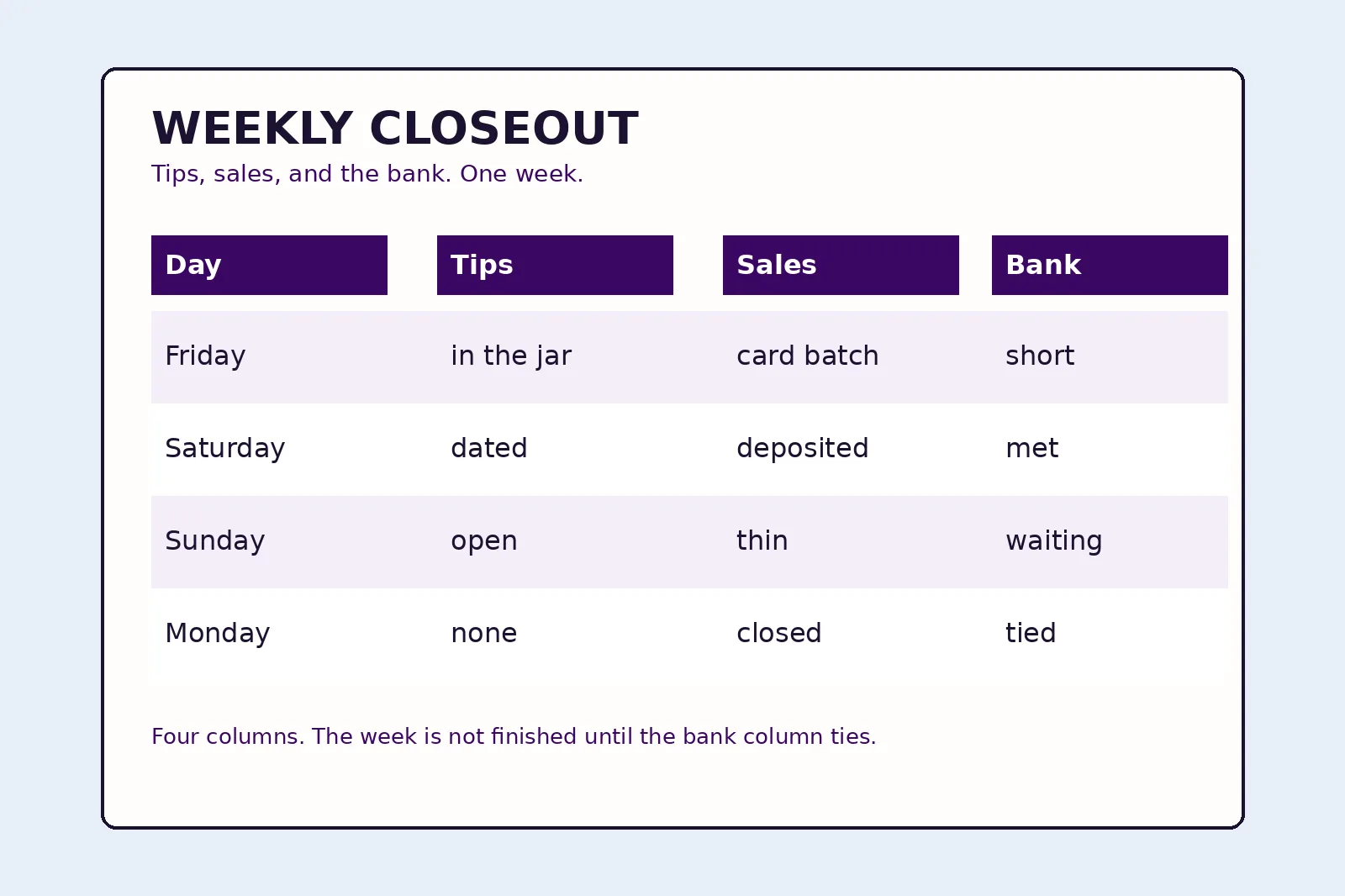
Owners who serve food already know the week in their bones. Saturday is a different business from Tuesday. The card batch, the cash drawer, the voids, and the tips all land on a date, and that date belongs to one week. If the week never closes, the month is a story someone tells in April. We would rather the month be a stack of weeks that already tied to the bank.
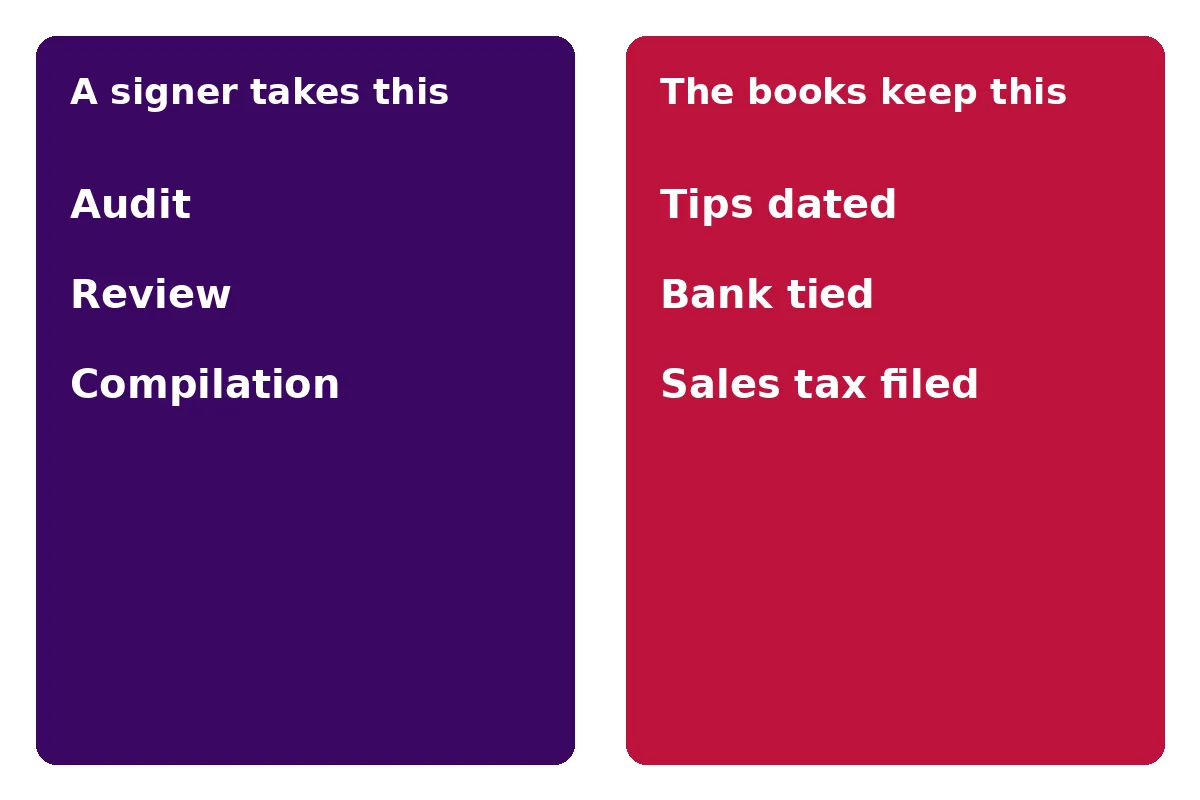
The work owners ask this practice for is ordinary and specific. The books for a dining week get matched to the bank statement before anyone calls that week finished. Payday is arranged on a provider the owner already runs, and the run itself still leaves from the owner's login. The return is prepared from those finished weeks, and we read the year together while a reservation and a draw can still change, earlier than any letter from the state. Statements with no signature sit in that same pile. An audit, a review, or a compilation is the request that leaves for a firm that can sign.
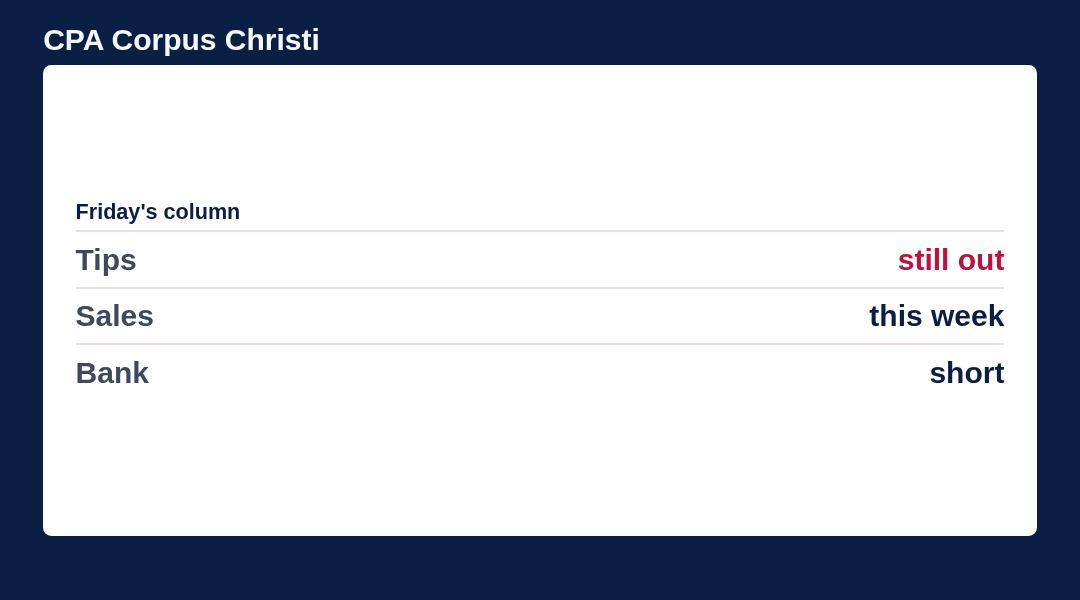
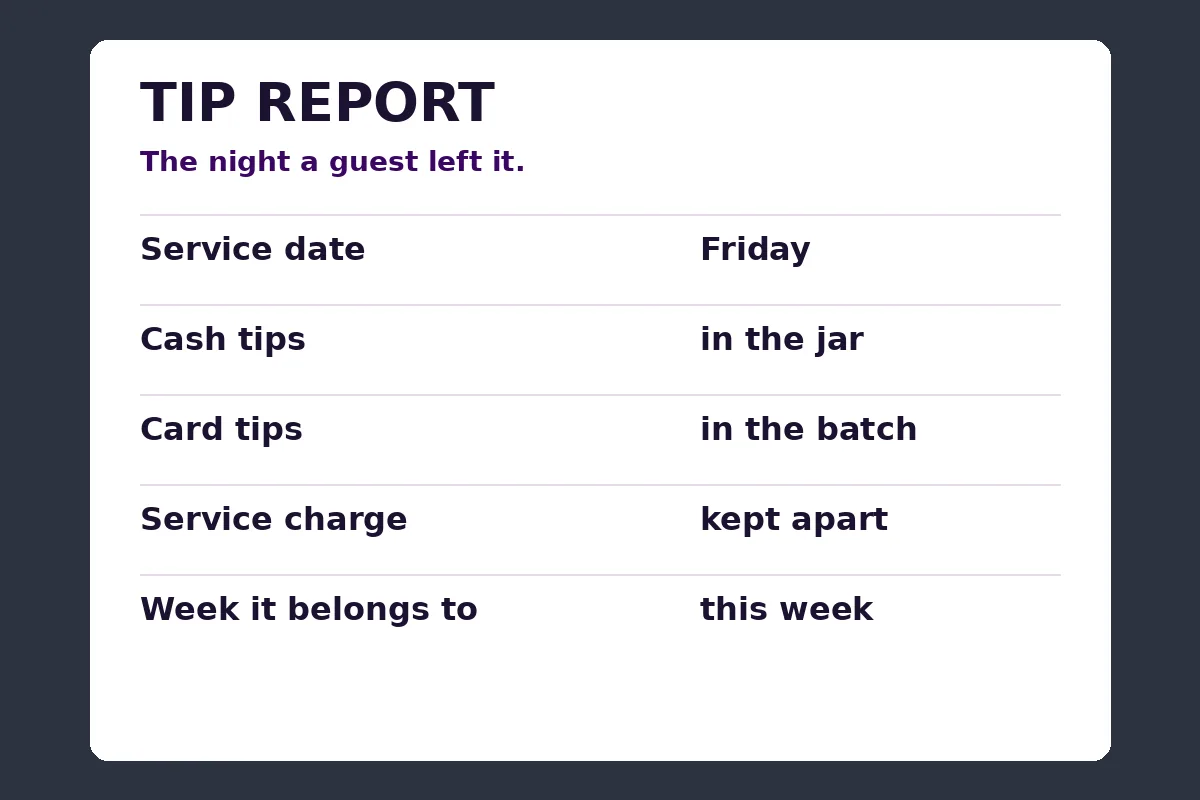
Catch-up is a dated project with a finish line. Open weeks get a count and a date. The monthly rhythm starts after that count is done. A half-posted Saturday stays open until it ties, and the earliest open week is the first thing named. The deposit that posts after the weekend still belongs to the Saturday it was earned, and we hold that week open until the tips sit on the same line.
What the bank feed is for
The lines waiting in the bank feed are the week, still unsorted. We want each one matched to a category you would recognize next month, then matched to the statement until the difference is zero. A transfer between your own accounts is booked so both sides can see it, not as a special type that is hard to undo later. When the screen says the week is finished, the feed and the statement are telling the same story.
That is a relief you can feel. The Saturday that worried you is no longer a pile of paper in a drawer. It is a week with a name, and the next Tuesday starts clean.
Payday stays in the owner's name
A crew that turns over still needs a provider account, a deposit schedule, and a chart that can show wages apart from owner draws. Those three are opened under the owner's name. The owner approves the run and sends it. The close then shows that the run happened, which is all the return needs later. Sending the run stays with the owner. The work we do is the setup, and the owner remains the one who releases each payday.
The election before the tip question
A dining LLC can be taxed in more than one way, and the tip question changes shape after that choice. We ask how the entity files before we talk about pools, service charges, or owner pay. Four paths are enough to name on a call. The return and the weekly close should be the same story, one practice reading both.
A fall Saturday, while a reservation can still move
By October a seasonal room has a shape. Hiring for the winter is either happening or it is not. Owner pay is either chosen or it is drifting. Estimates are either keeping April calm or they are not. We put the still-open choices on the table in the fall, while a reservation can still move and a draw can still be reclassified with the year in mind. A holiday Saturday with a full book is a poor time to notice that an October owner draw never received a category.
Quarterly estimates are the plain tool. A year that waits for one April number is how a thin winter becomes a shock. We would rather you see the year in pieces, the same way you already see the dining room in weeks.
Contractors need a file before January, not a scramble on the last day of the month. Names, amounts, and the form each person should receive belong with the weeks they worked. We keep that list beside the close so the new year does not open with a missing packet.
If you also have rooms, say so. The room report uses its own worksheet, and the dining sales tax uses another. The page on the twentieth says how we tell them apart. The stack page says what the published rates actually are, including the two public readings of the city room tax that do not match.
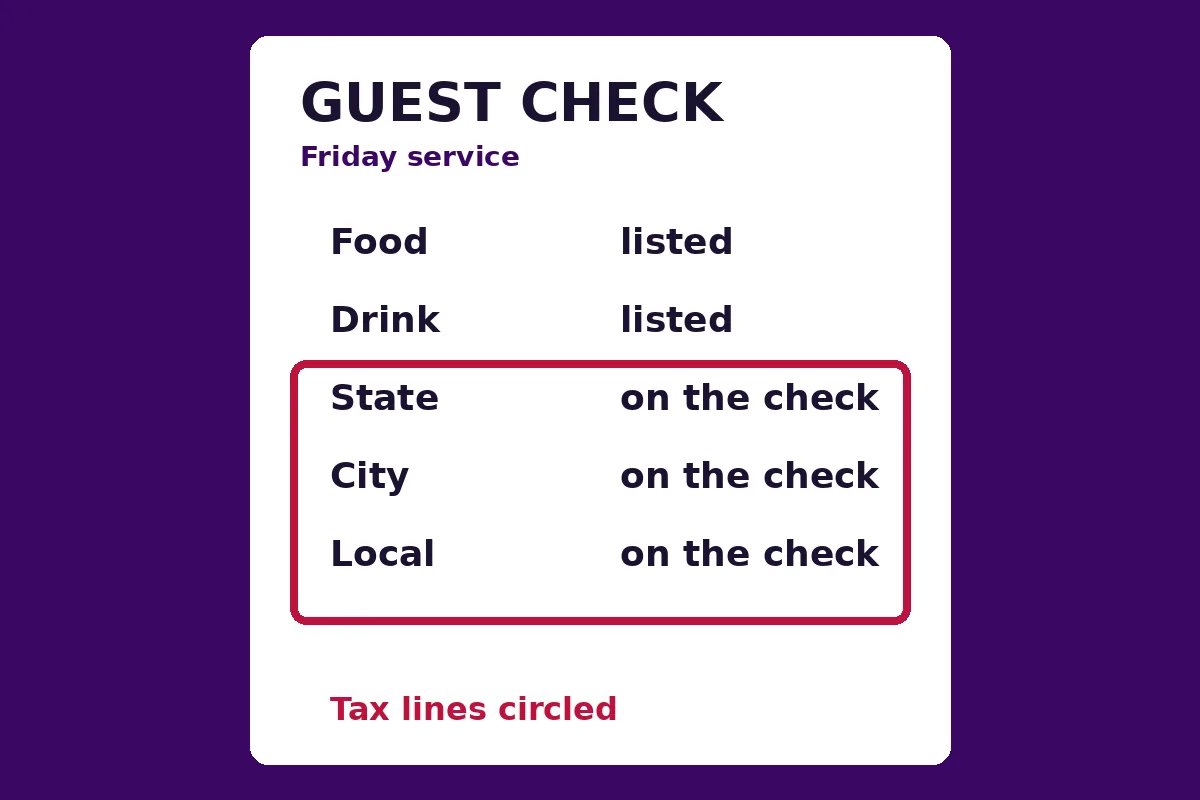
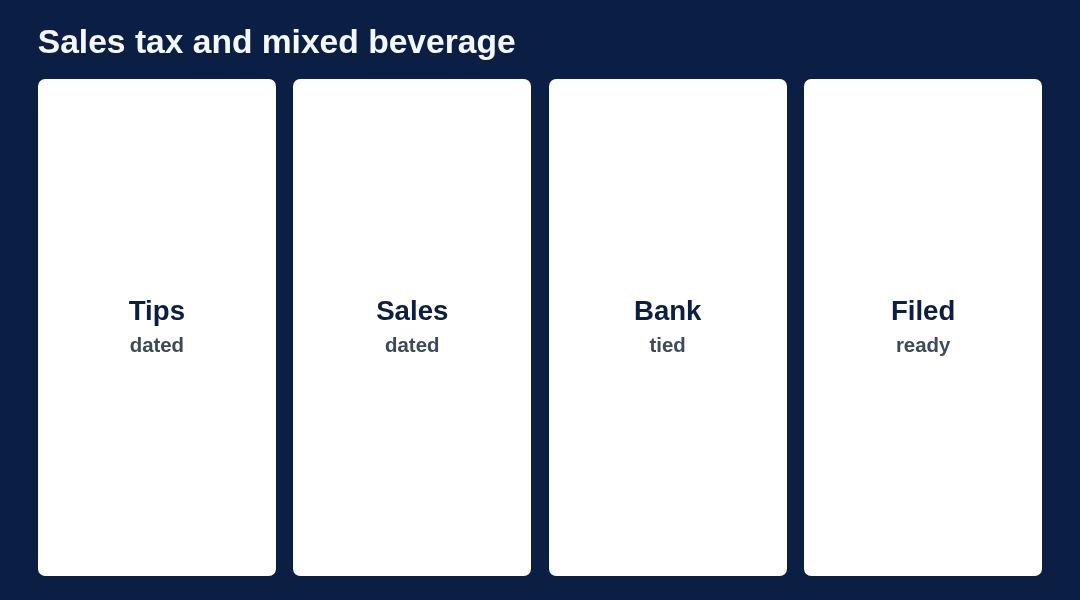
The 1.375 percent city line on a taxable sale is a number we put on the week it was earned, not on the morning someone remembers it. The drawer still has to tie, tips included, or the twentieth copies a guess.
We date that city line to the week the guest paid, and we keep the drawer count in the same note, so the twentieth can copy a week that already tied.
Steven Palmieri, a Tax CFO and the Entrepreneur's CFO, closes hospitality weeks with owners in Corpus Christi on a shared screen, and Steven and his team stay on that screen through the return.
The plates can go out without anyone from this practice standing on the floor. The bank feed and the shared screen were built so a week can close from another Texas city. The bank login and the payday login stay in your name. We keep the monthly rhythm. Name the open week on the form and that week is where the call starts.